Building date: 1855
Original use:
Corner structures:
Mortar application and content:
Types and uses of stones: Washed cobblestones
Types and choice of windows:
Structures with similar masonry details:
Masons who worked on building:
Unique features:
Map views courtesy Google Maps. Google Maps street level view not available. Address is Google Earth confirmed; 42°19'28.67"N 77°39'54.79"W. Current owner of record, Wright as of the 2019 Tax Roll.
Town of Hornellsville and Steuben County Maps
Steuben County's other cobblestone house, called "Stonen" at 91 Hill St. in Hornell, was built in 1855 in Tuscan Villa style by David Wellever, a local brick maker, for E.T. Young who came from France. The washed cobblestones were hauled here from the shores of Lake Ontario. Some elements such as the large windows on the main floor and brackets are of 1870s vintage. The windows are said to have come from France. The porch which provides shelter at the main door and a balcony for the upper-level French doors, has a bracketed cornice and a wrought iron balustrade at the upper level. At either side of the porch are French doors with half-round lights in each door leaf and a console-supported stone hood. Cut limestone is also used for the quoins, lintels, and sills. The house is on a large lot amidst mature trees, on a steep-sloping site overlooking the city. The front door is connected to the street by a cascading sidewalk and stair. At the street frontage is a ca. 1900 concrete retaining wall inlaid with rows of cobbles which mimics the exterior walls of the house. Richard Palmer blog.
There is a very important example of cobblestone in the City of Hornell, Steuben Co. that isn't in Schmidt's book, ["Cobblestone Masonry"], or either of the surveys (Roudabush, Wolfish). This is a magnificent Italian-style cobblestone residence at 91 Hill St., a hilltop site in a residential neighborhood with a commanding view, east, into downtown Hornell (at the base of the hill). It's identified as the "Stonen House".
I first "discovered" this house when photographing buildings in Hornell, for a public talk I gave over a dozen years ago. It was a huge surprise - to me - as it wasn't in Schmidt/Roudabush/Wolfish - but "the locals" certainly knew of it. In fact, they showed me an image of the house (illustration) that appears in the border of a large-format wall map of their community dating from c. 1850s. The border of the map features other "prominent buildings" in the Hornell community. The illustration of the Hill St house is interesting, as the anonymous artist used little "dots" to indicate -in an abstract way - the walls of the house were built of cobblestone. It would nice to include this historic image in the Cobblestone Info Base. I saw the large wall map at the Hornell Public Library, where it was hanging - in full sight - on the wall in one of the public rooms.
And, as an aside: when I told the Hornell residents about the cobblestone house in Bath (who claimed to have "the southern-most cobblestone building in New York State") - the Hornell residents were not amused. In fact, they took out a US Geological Survey map to identify, precisely, the exact locations of both the Bath & Hornell cobblestones. And, to their delight, they proved the Hornell cobblestone was actually a tiny bit farther south. This new information, therefore, enabled them to assert the claim of "having the southern-most cobblestone building in New York State!" Email 03/25/2020, Cynthia Howk
 IMG_0766.jpg ¹ "Stonen" in 1873 | 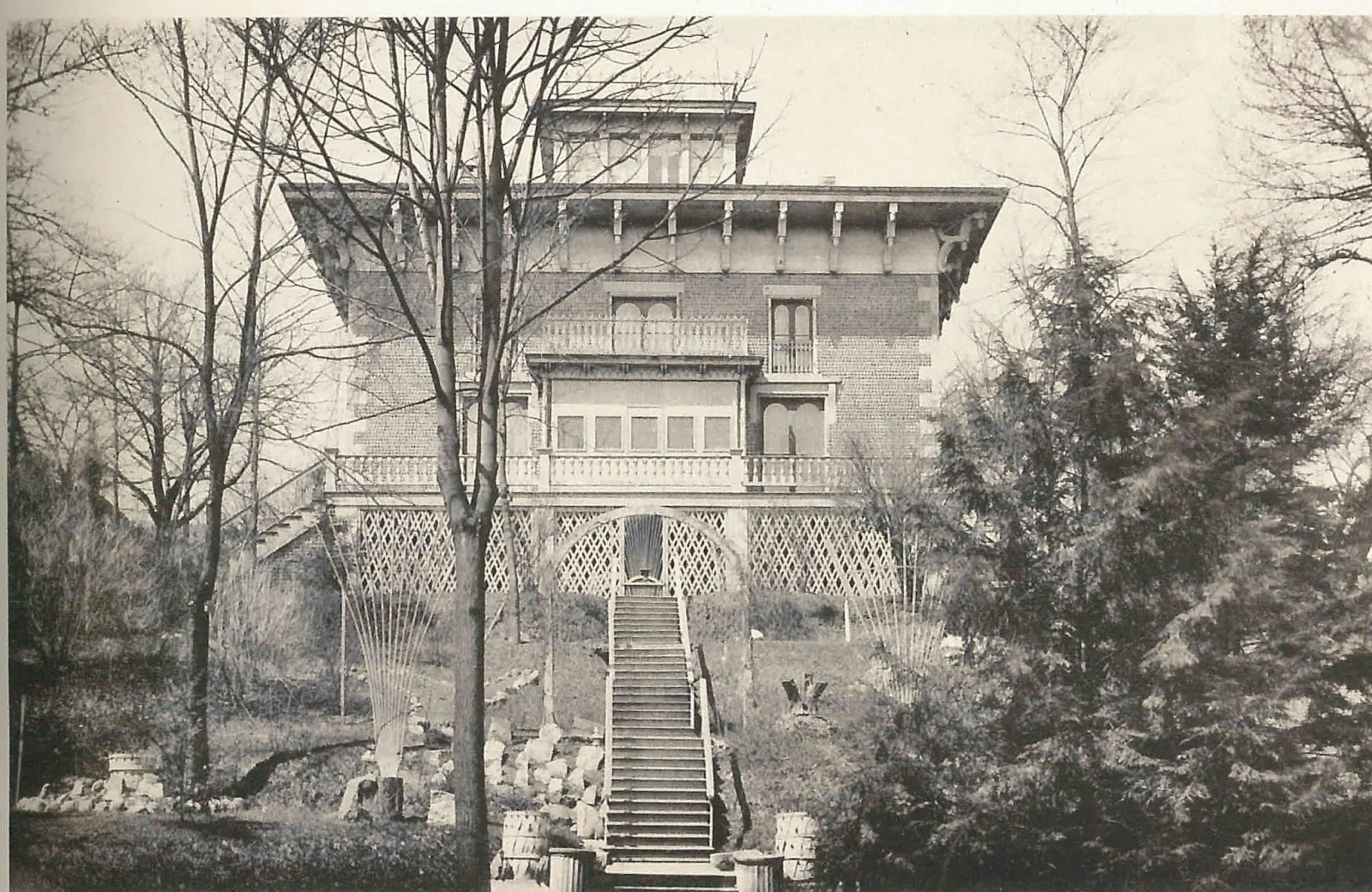 91 Hill St., Hornell.jpg ¹ "Stonen" as it appeared in the early 20th Century. | 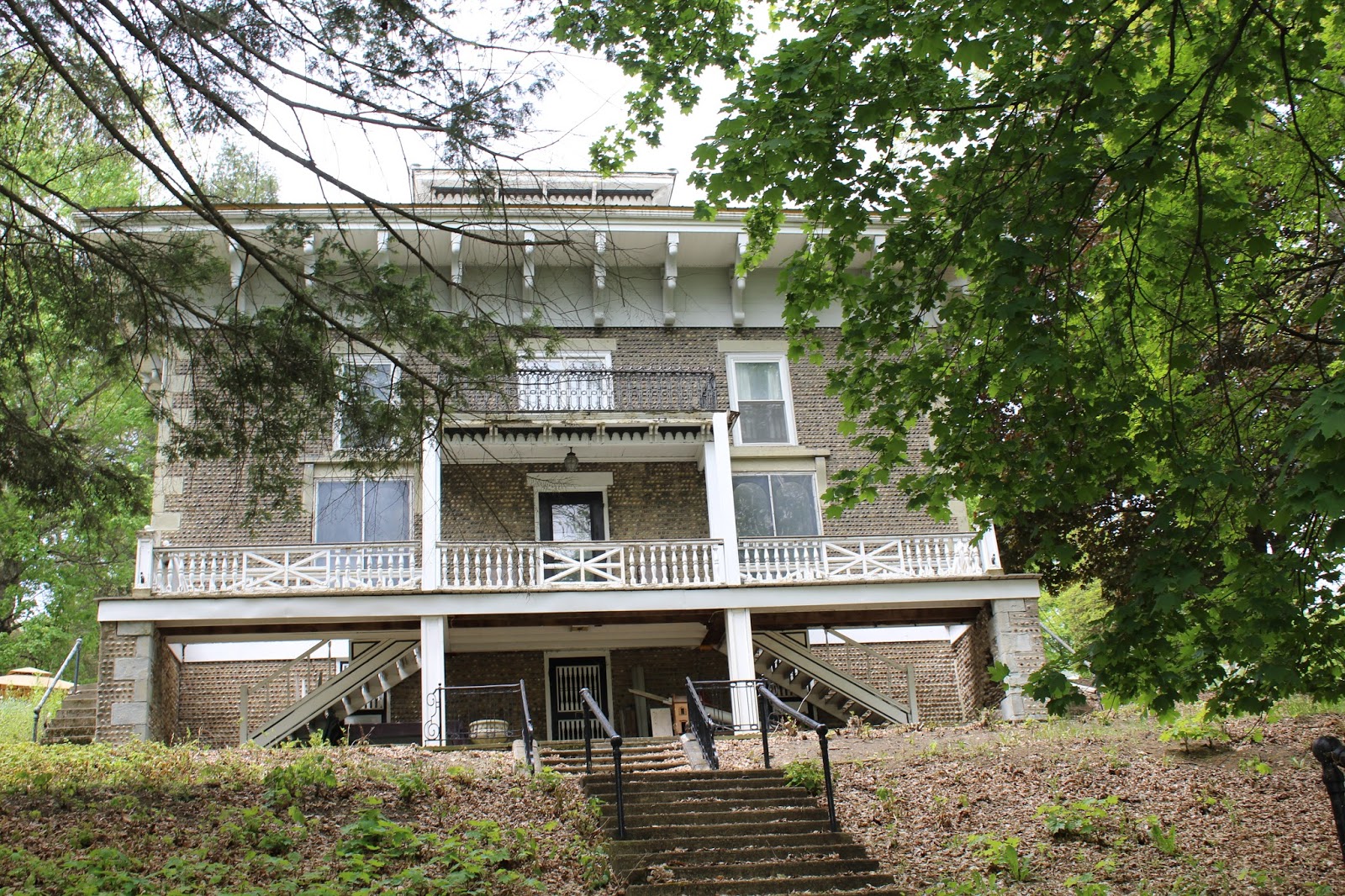 IMG_0756.jpg ² |  IMG_0757.jpg ² |
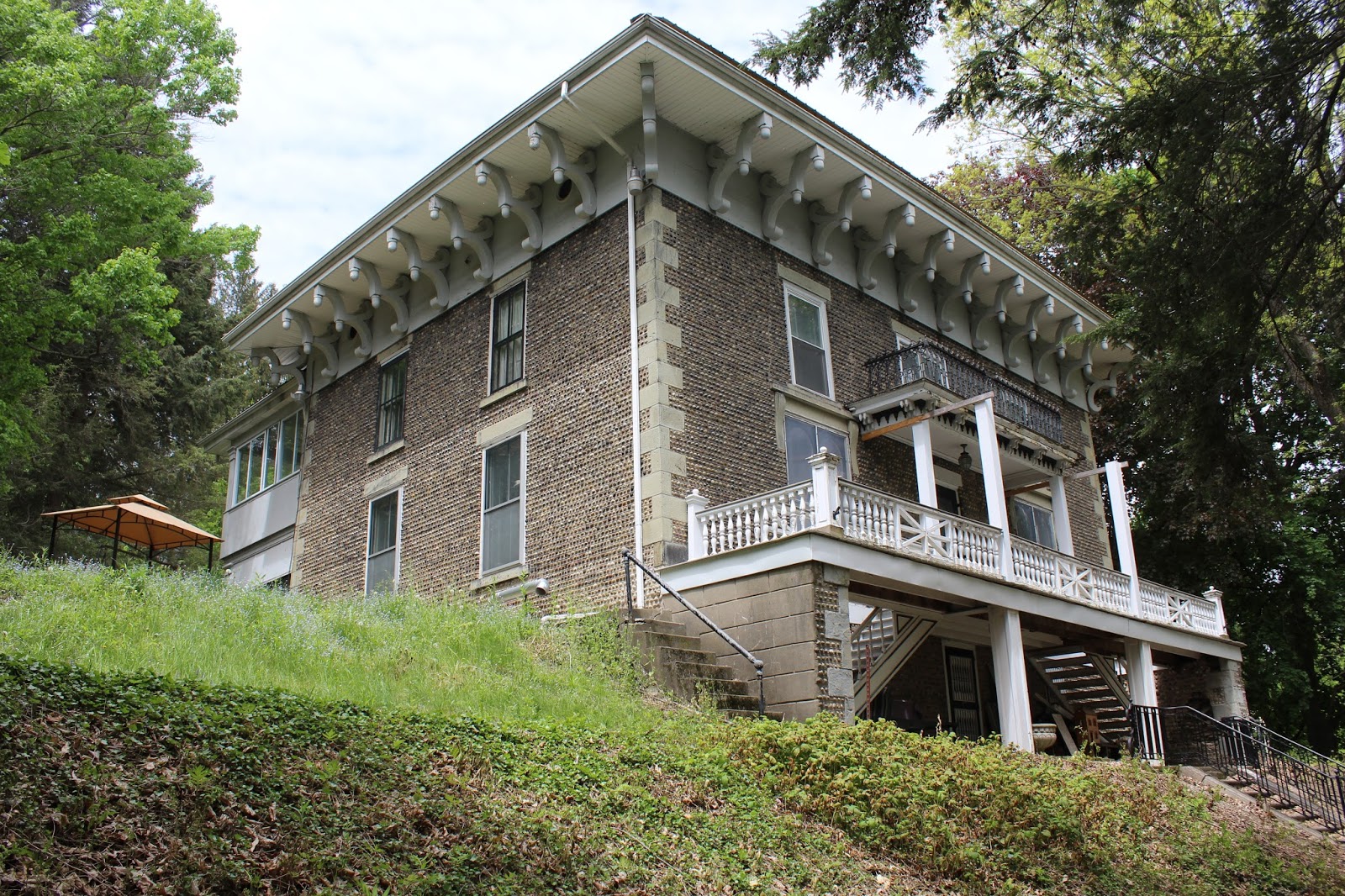 IMG_0758.jpg ² |
¹ Image courtesy Richard Palmer Blog. Attribution not provided.
² Photography courtesy Richard Palmer.
